
Basic Operations
Addition, subtraction, multiplication, and division of whole numbers — excludes fractions (see fraction-operations) and decimals (see decimal-operations)
Generate Unlimited Practice Questions
Sign up for free and get 50 practice questions to start your prep.
Start Free PracticeLearn This Topic
Welcome to the foundation of all math! Imagine you're running the ultimate video game empire. 🎮 Basic operations are the tools you use to manage your virtual world. Addition is like collecting gold coins, and subtraction is when you spend those coins on epic upgrades. Multiplication is your awesome power-up multiplier (like getting 5 coins at once instead of 1!), and division is how you share the loot fairly with your gaming squad. 🏆
On the ISEE, you'll see two different math sections. The Mathematics Achievement section will test your raw calculation skills—can you add, subtract, multiply, and divide carefully without making silly mistakes? Then, the Quantitative Reasoning section might ask you to be a math detective. Instead of just solving a huge math problem, you might have to compare two columns (Column A and Column B) to see which one is bigger. 🕵️♂️
The trick is that you don't always have to do all the math! Sometimes, a quick estimation or looking at the numbers closely saves you tons of time. Remember, the ISEE does not penalize you for guessing. So if you're ever stuck on a super long division problem and time is running out, take your best guess and keep playing the game!
Practice Questions
5 practice questions for ISEE Lower Level
Show Solution
- To find the number of packs, Sarah must take the total number of markers and divide them into equal groups based on how many markers are in a single pack. Therefore, division is the correct operation.
Show Solution
- To subtract from , you must regroup (borrow) across the zeros. becomes thousands, hundreds, tens, and ones. Subtracting the ones: . Subtracting the tens: . Subtracting the hundreds: . The thousands stay . The result is .
Show Solution
- Add the numbers by place value. First, add the ones: (write down , carry over ten). Next, add the tens: (write down , carry over hundred). Finally, add the hundreds: . The result is .
Show Solution
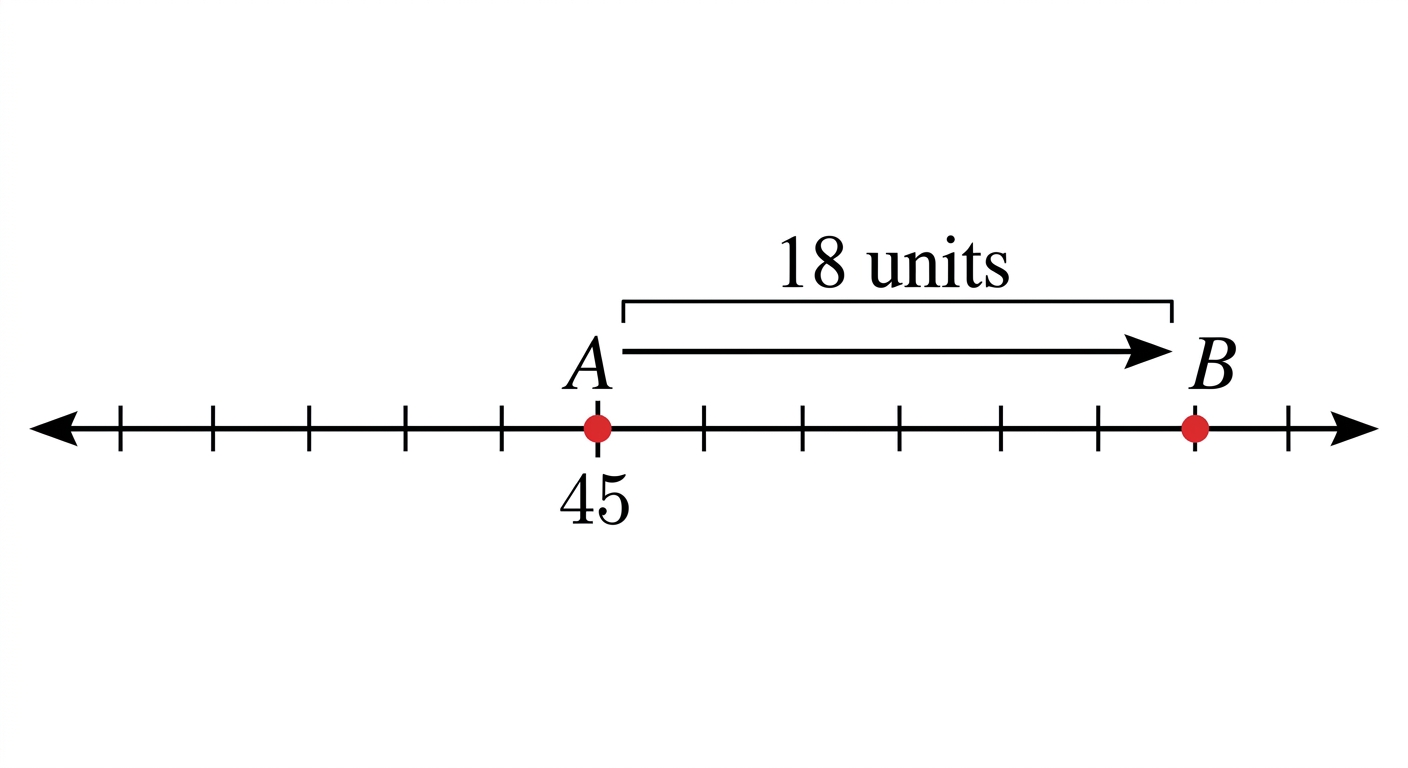
- Moving to the right on a number line means addition. To find the location of point , add to the starting location of . .
Show Solution
- David has equal groups (boxes) of toy cars. To find the total number of items in equal groups, you multiply the number of groups by the number of items in each group: .
Tips & Strategies
- Use estimation to check your answers! If you are multiplying , think 'That's close to , which is 500.' If your answer is 5,280, you know you made a mistake!
- On Quantitative Comparison questions, you don't always have to do the full math. If Column A is and Column B is , you can easily see Column A has bigger numbers being multiplied, so it must be larger!
- The ISEE has NO guessing penalty! If you get stuck on a really long division problem, don't waste 5 minutes on it. Eliminate the crazy answers, take your best guess, and move on.
Common Mistakes
- Watch out for sloppy handwriting! When adding or subtracting big numbers, make sure you line up your ones, tens, and hundreds columns perfectly. If they get crooked, you'll add the wrong numbers together.
- Don't forget to write down your 'carries' in addition and 'borrows' in subtraction. Trying to hold those numbers in your head is a fast track to choosing a trick answer!
Frequently Asked Questions
Do I get a calculator on the ISEE?
No calculators allowed! 🚫 You'll need to do all the addition, subtraction, multiplication, and division on your scratch paper.
What if I completely forget my times tables during the test?
Take a deep breath! If you forget what is, just use what you know. You probably know . Just subtract 7 twice (). You can always build up to the answer!
Should I double-check my math on every single question?
Only if you have extra time at the end! The ISEE is timed, so it's better to work carefully the first time and keep moving. If you finish a section early, then go back and check your work.
What is a Quantitative Comparison question?
It's a special puzzle on the ISEE Quantitative Reasoning section! You get two columns (A and B) and have to decide which side is bigger, if they are equal, or if it's a mystery (Cannot be determined). 🕵️♀️