
Transformations
Reflections, rotations, translations, and symmetry
Generate Unlimited Practice Questions
Sign up for free and get 50 practice questions to start your prep.
Start Free PracticeLearn This Topic
Imagine you're playing your favorite video game. Your character needs to slide under a wall, flip over a laser, or spin around to dodge a trap. Guess what? You are already a master of Geometry Transformations! 🎮
On the ISEE, transformations are just a fun shape manipulation game. There are three main moves you need to know. First, a 'translation' is just a fancy math word for sliding. Think of sliding a fresh pizza box across the dinner table to your friend. 🍕 The shape doesn't turn or flip; it just moves left, right, up, or down. Second, a 'reflection' is a flip. It’s exactly like looking in a mirror. On a math grid, we usually flip shapes over the -axis (the horizontal line) or the -axis (the vertical line). Third, a 'rotation' is a spin, just like a fidget spinner or a steering wheel.
Finally, the test might ask you about 'symmetry'. Symmetry is when you can fold a shape perfectly in half so both sides match, just like the wings of a beautiful butterfly! 🦋 The ISEE loves to test these simple moves on a coordinate grid. The best part? You don't need magic to solve them. If you can count spaces on a board game, you can slide, flip, and spin your way to the right answer!
Practice Questions
3 practice questions for ISEE Lower Level
Show Solution
- A line of symmetry divides a figure into two identical, matching halves. A vertical line of symmetry means the figure can be folded straight down the middle from left to right. The letters A and M both have exactly one vertical line of symmetry. The letters B and D have one horizontal line of symmetry. H and X have two lines of symmetry (both vertical and horizontal). S and Z have zero lines of symmetry.
Show Solution
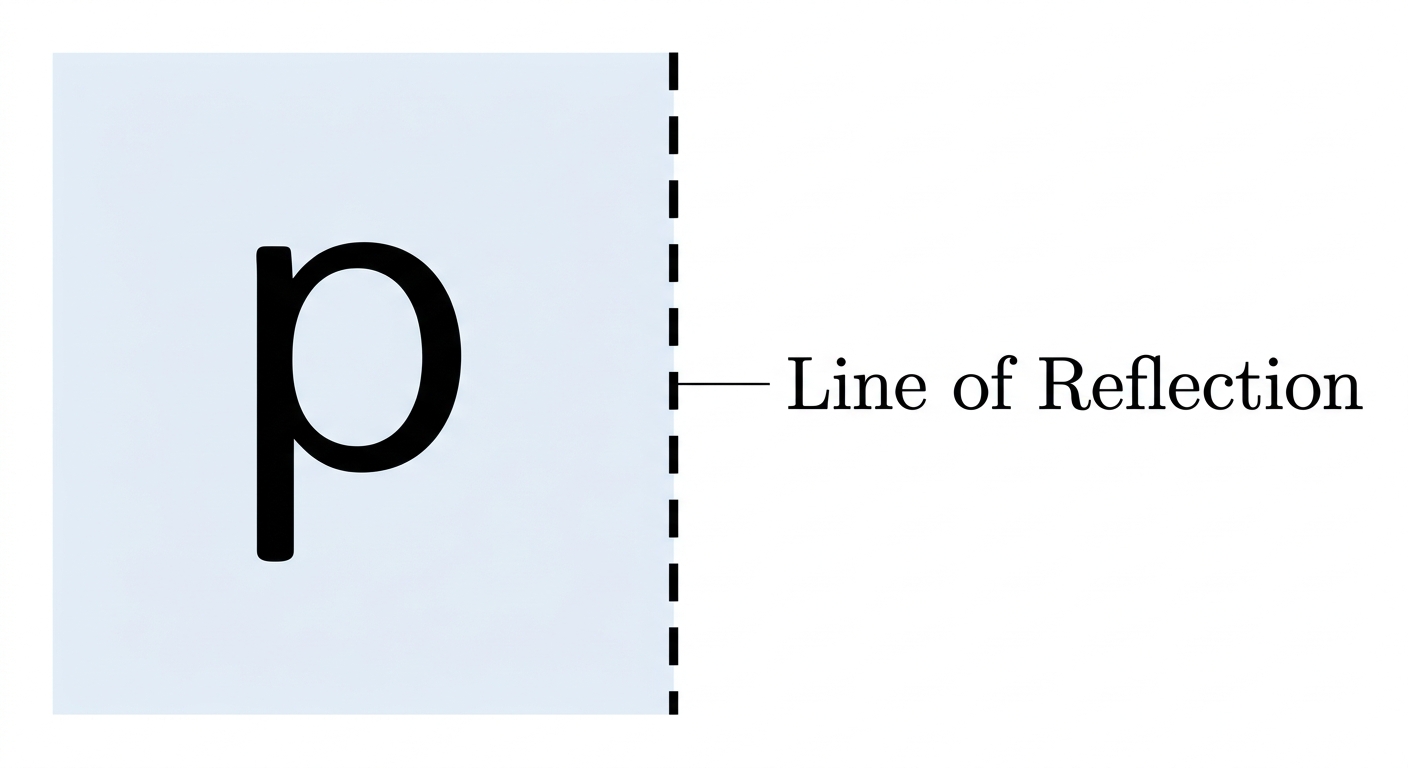
- A reflection across a vertical line flips a figure from left to right. The lowercase letter 'p' has a straight vertical stem on the left and a circle (loop) on the top right. When flipped left-to-right, the stem moves to the right side and the circle moves to the top left. This forms the lowercase letter 'q'.
Show Solution
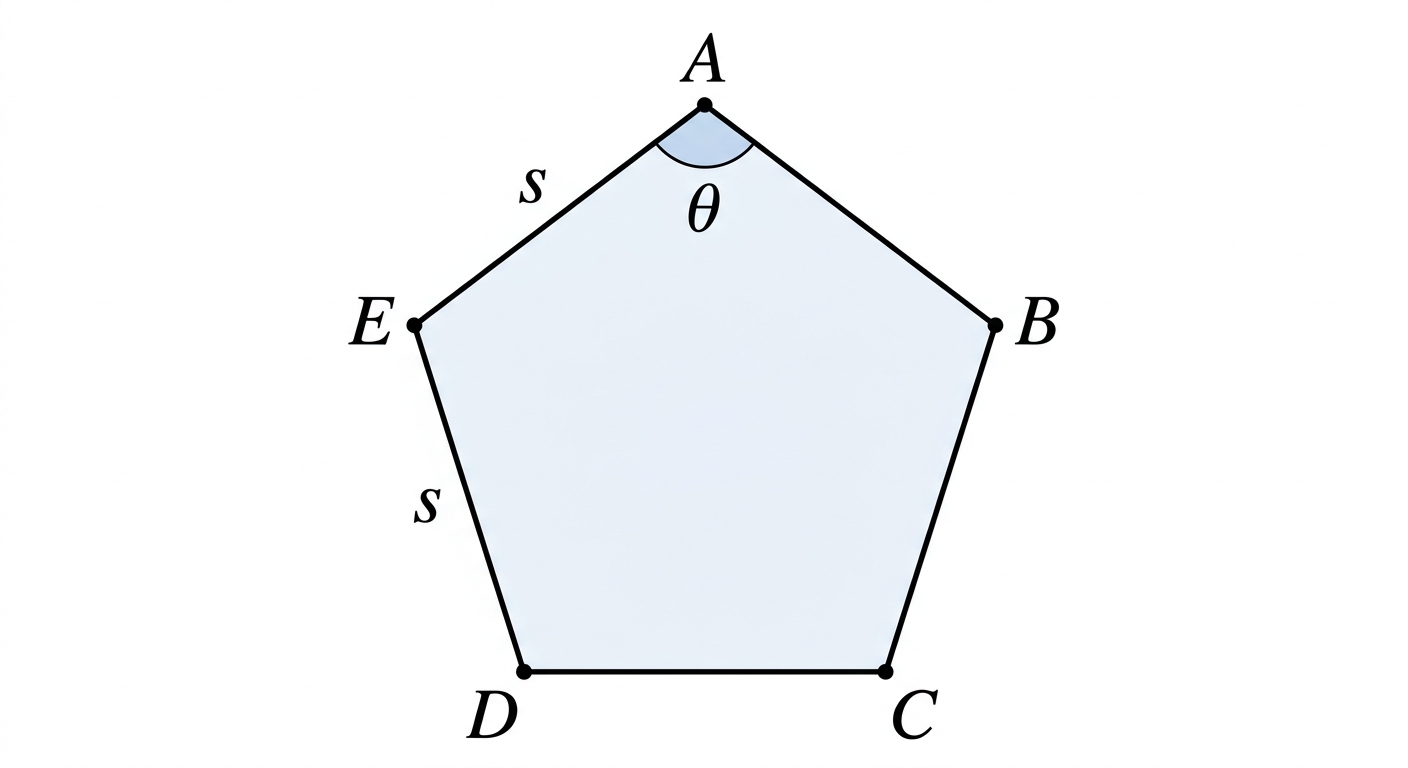
- A line of symmetry is a line that divides a shape into two identical halves that are mirror images of each other. A regular pentagon is a polygon with equal sides and equal angles. In any regular polygon, the number of lines of symmetry is equal to the number of sides. You can draw a line of symmetry from each of the pentagon's corners (vertices) straight across to the middle of the opposite side. Therefore, a regular pentagon has exactly lines of symmetry.
Tips & Strategies
- Draw it out! ✏️ If the ISEE gives you a transformation problem without a picture, sketch a quick coordinate grid on your scratch paper. It's much easier to see a slide or flip than to do it in your head.
- Remember the vocabulary: 'Translate' means slide, 'Reflect' means flip, and 'Rotate' means spin. If you ever need to rotate , remember that is exactly of a full circle!
Common Mistakes
- Watch out for reflecting over the wrong axis! If the question says -axis, you are jumping UP or DOWN, which changes the number. If it says -axis, you are jumping LEFT or RIGHT, which changes the number. It feels backward, so be careful! 🚦
Frequently Asked Questions
Do I need to memorize complicated rotation formulas for the ISEE?
Usually, no! Most ISEE questions for your level focus on translations (sliding), reflections (flipping), and basic symmetry. If rotations appear, they are usually visual puzzles rather than complex math formulas.
What does 'line of symmetry' mean?
It's an imaginary fold line. If you fold a shape along that line, both halves will match up perfectly. Think of folding a piece of paper to cut out a perfectly even heart!
Are transformations tested on both math sections?
Yes! You might see them as regular computation problems in the Mathematics Achievement section, or as comparing two shapes (Column A vs Column B) in the Quantitative Reasoning section.
What if I forget the reflection rules during the test?
Don't panic! Just draw a quick grid on your scratch paper, put a dot where the point is, and literally count the jumps to the axis, then count the same number of jumps to the other side.