
Transformations
Reflections, rotations, translations, and symmetry
Generate Unlimited Practice Questions
Sign up for free and get 50 practice questions to start your prep.
Start Free PracticeLearn This Topic
Have you ever played a video game where your character has to slide under a wall, spin around to dodge a fireball, or look into a magical mirror? 🎮 Well, guess what? You were already doing Geometry Transformations! Transformations are just fancy math words for moving a shape around without changing what it actually is. It's like taking a slice of pizza—whether you slide it across the table, spin it around, or flip it upside down (uh oh, messy! 🍕), it's still the exact same slice of pizza!
In Geometry, we have three main moves. First, there's a Translation. That's just a slide! Imagine sliding across a slippery floor in your socks. Next is a Rotation, which means spinning. Think of a basketball spinning on your finger. A full spin is 360 degrees, so a half spin is of that, or 180 degrees! Finally, we have a Reflection, which is a flip. It's exactly what you see when you look in the mirror in the morning! 🪞
The SSAT loves to test these moves. They also love Symmetry, which is when you can fold something perfectly in half so both sides match, like a beautiful butterfly. On the SSAT, you'll be a 'shape detective,' figuring out exactly how a shape moved from point A to point B. Don't worry, once you learn the secret moves, these questions become super fun puzzles to solve! 🧩 Let's get moving!
Practice Questions
4 practice questions for SSAT Middle Level
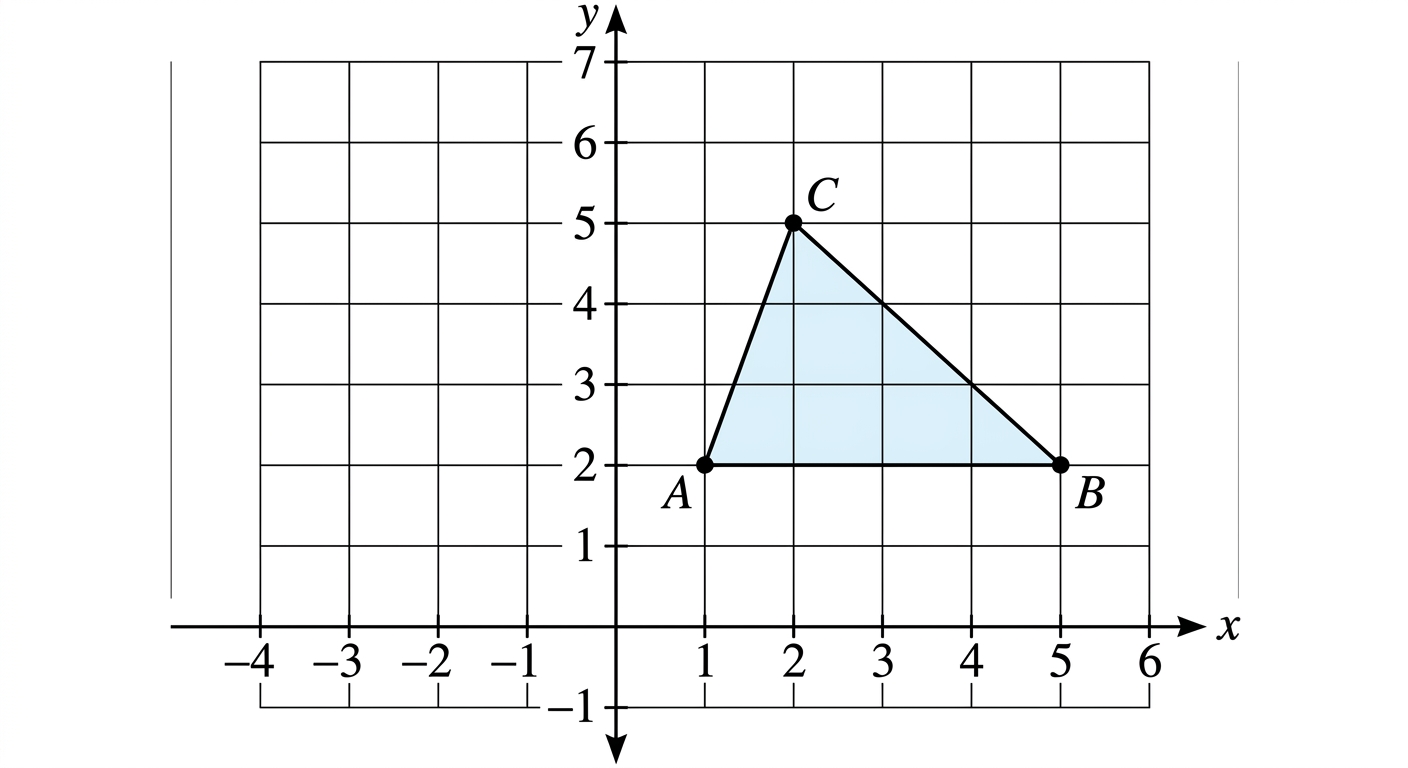
A(1, 2), B(4, 2), and C(2, 5). If the triangle is translated according to the rule , what are the new coordinates of vertex ? (5, 4) (5, 6) (2, 5) Show Solution
- To find the new coordinates of vertex after the translation, apply the given rule to the original coordinates of
C(2, 5).For the x-coordinate:
For the y-coordinate:
So, the new coordinates of vertex are .
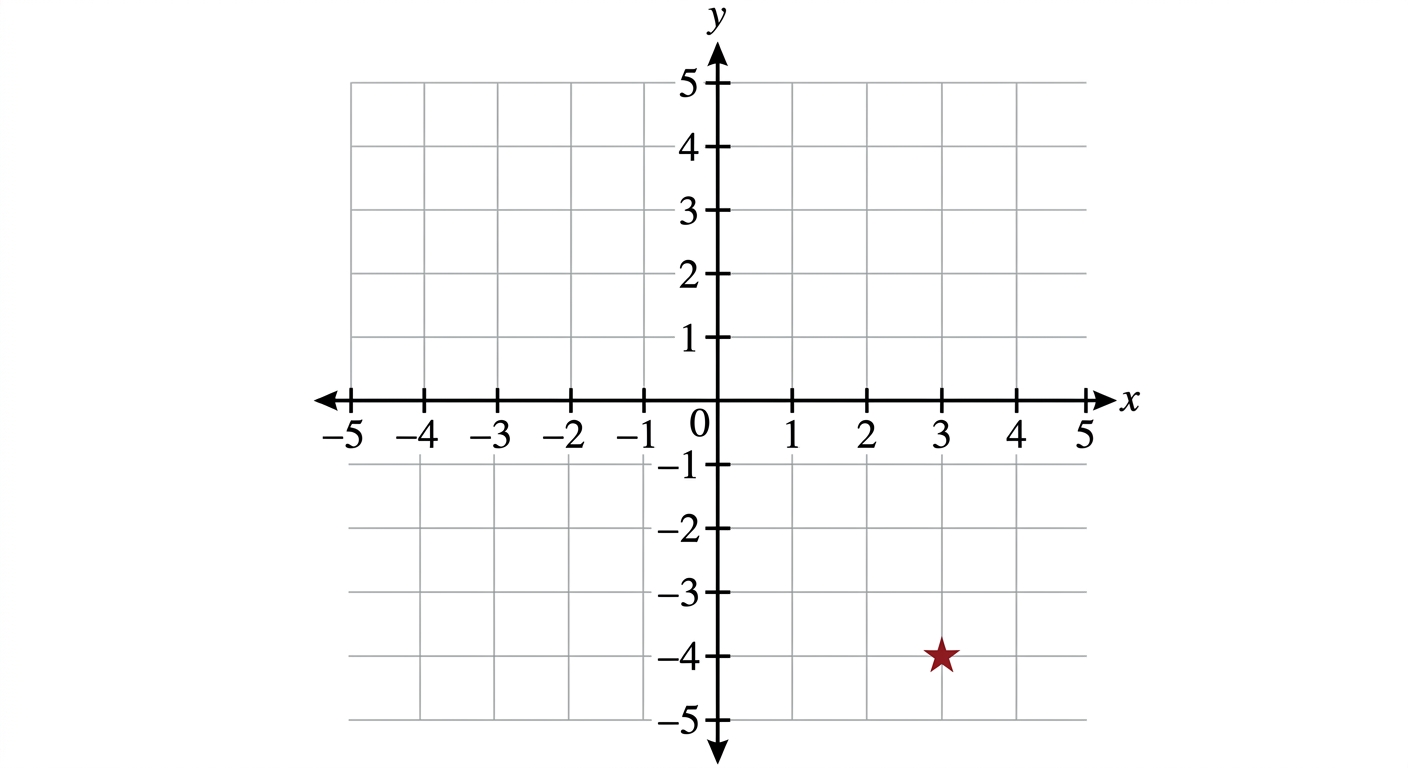
(3, 4) (4, 3) Show Solution
- When a point
(x, y)is reflected across the y-axis, the x-coordinate changes its sign, while the y-coordinate remains the same. The transformation rule is .Given the original point :
Apply the rule:
x-coordinate:
y-coordinate: (remains the same)
Therefore, the coordinates of the reflected star point are .
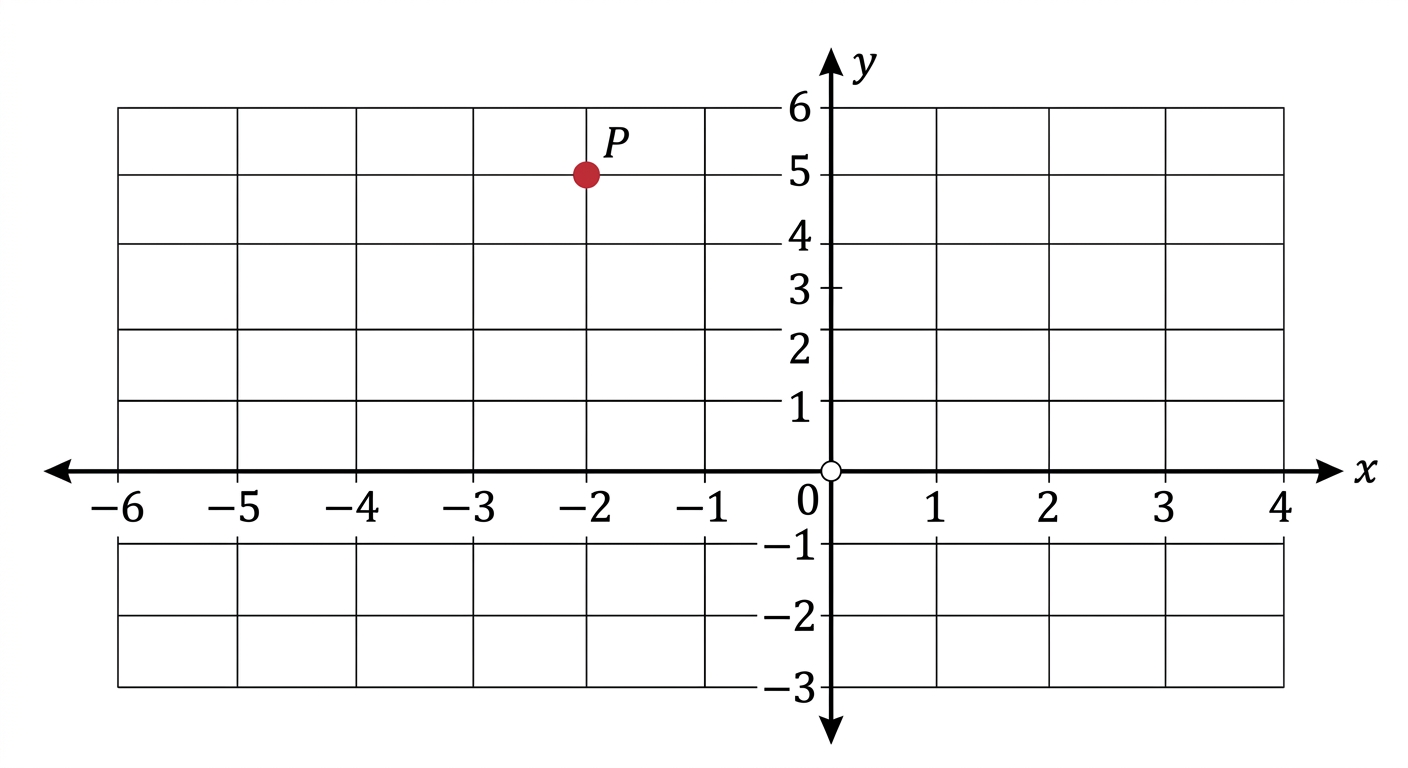
(5, 2) Show Solution
- When a point
(x, y)is rotated degrees counter-clockwise about the origin, the transformation rule is .Given the original point :
Apply the rule:
x-coordinate of :
y-coordinate of :
Therefore, the coordinates of the new point are .
Show Solution
- Let's analyze the lines of symmetry for each shape:
• A. Rectangle: A non-square rectangle has exactly two lines of symmetry (one horizontal and one vertical, passing through the midpoints of opposite sides). Only if it's a square does it have four.
• B. Equilateral Triangle: An equilateral triangle has exactly three lines of symmetry (from each vertex to the midpoint of the opposite side).
• C. Rhombus: A non-square rhombus has exactly two lines of symmetry (along its diagonals). Only if it's a square does it have four.
• D. Square: A square always has exactly four lines of symmetry (two connecting midpoints of opposite sides, and two along its diagonals).
• E. Regular Pentagon: A regular pentagon has exactly five lines of symmetry.
Therefore, only a square always has exactly four lines of symmetry.
Tips & Strategies
- Draw it out! ✏️ If the SSAT asks you to reflect or rotate a shape, use your pencil to lightly draw the new shape on the grid. Don't try to do the whole flip in your head!
- Remember the Mirror Rule: When reflecting over the x-axis or y-axis, count the jumps from the point to the mirror line, then count the exact same number of jumps on the other side.
- Translations are just slides. If a question says 'translate up 3 and right 2', just take one corner of the shape, move it up 3 and right 2, and then draw the rest of the shape from there.
Common Mistakes
- Watch out for mixing up the axes! 🛑 The x-axis is the flat horizontal line (like the horizon), and the y-axis is the tall vertical line (like a yo-yo going up and down).
- Don't forget that rotating, reflecting, and translating NEVER change the size of the shape! If your new shape is bigger or smaller, something went wrong.
Frequently Asked Questions
Do I need to memorize complicated rotation formulas for the SSAT?
Nope! For the SSAT, you usually just need to know how to rotate shapes 90 or 180 degrees visually. If you get stuck, try physically turning your test booklet to see what the shape looks like when spun!
What exactly is a line of symmetry?
It's an imaginary line where you can fold an image and have both halves match perfectly. Think of folding a piece of paper to cut out a perfect heart!
Will there be questions about changing the size of a shape?
Sometimes! That's called a 'dilation'. Just remember that a dilation is the ONLY transformation that changes a shape's size. If a shape has a scale factor of , it becomes half as large!