
Triangles
Triangle area, Pythagorean theorem, angle sums, congruence, and similarity — excludes general area/perimeter of other shapes (see area-perimeter-composite)
Generate Unlimited Practice Questions
Sign up for free and get 50 practice questions to start your prep.
Start Free PracticeLearn This Topic
Imagine a perfect slice of pizza, a bright yellow yield sign, or the sail of a pirate ship. What do they all have in common? They are all triangles! 🍕⛵ Triangles are everywhere, and they are one of the most important shapes you will see on the ISEE.
A triangle is simply a shape with three straight sides and three inside angles. The absolute most important 'magic number' for triangles is 180. If you add up all the inside angles of any triangle in the universe—no matter how big, small, or weirdly shaped—they will always add up to exactly .
There are a few special types of triangles you should know. A 'right triangle' has one corner that looks like a perfect square angle (like the corner of your room). An 'equilateral triangle' has three equal sides and three equal angles, making it look like a perfect nacho chip.
On the ISEE, you will see triangles in both the Quantitative Reasoning and Mathematics Achievement sections. The test-makers love to ask you to find a missing angle, calculate the area, or compare the sizes of two different triangles. Don't worry! Once you learn a couple of secret rules, like the magic 180 rule and the area formula, triangle questions become super fun puzzles to solve! 🔺✨
Practice Questions
3 practice questions for ISEE Upper Level
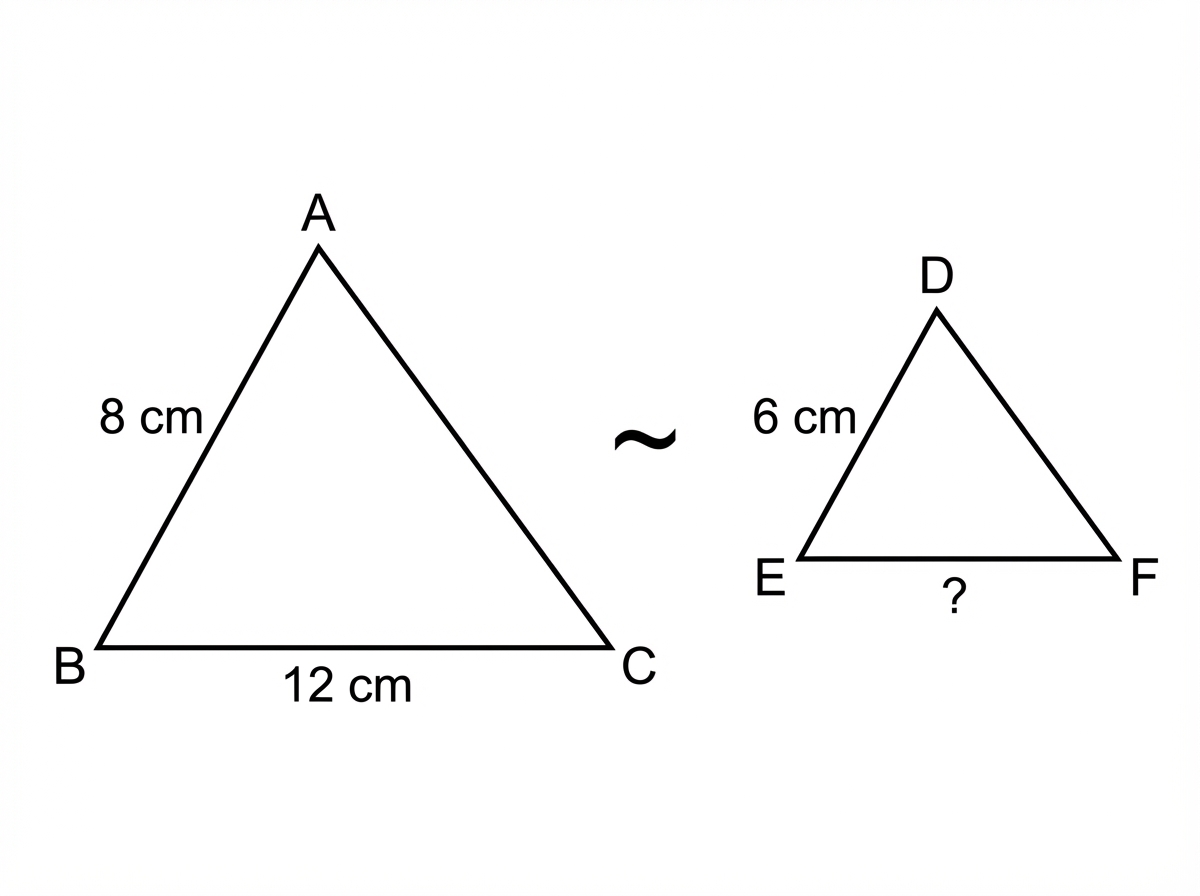
Show Solution
- Since the triangles are similar, the ratio of their corresponding sides is equal. Set up the proportion . Simplifying the fraction on the left gives . Cross-multiply to get , so cm.
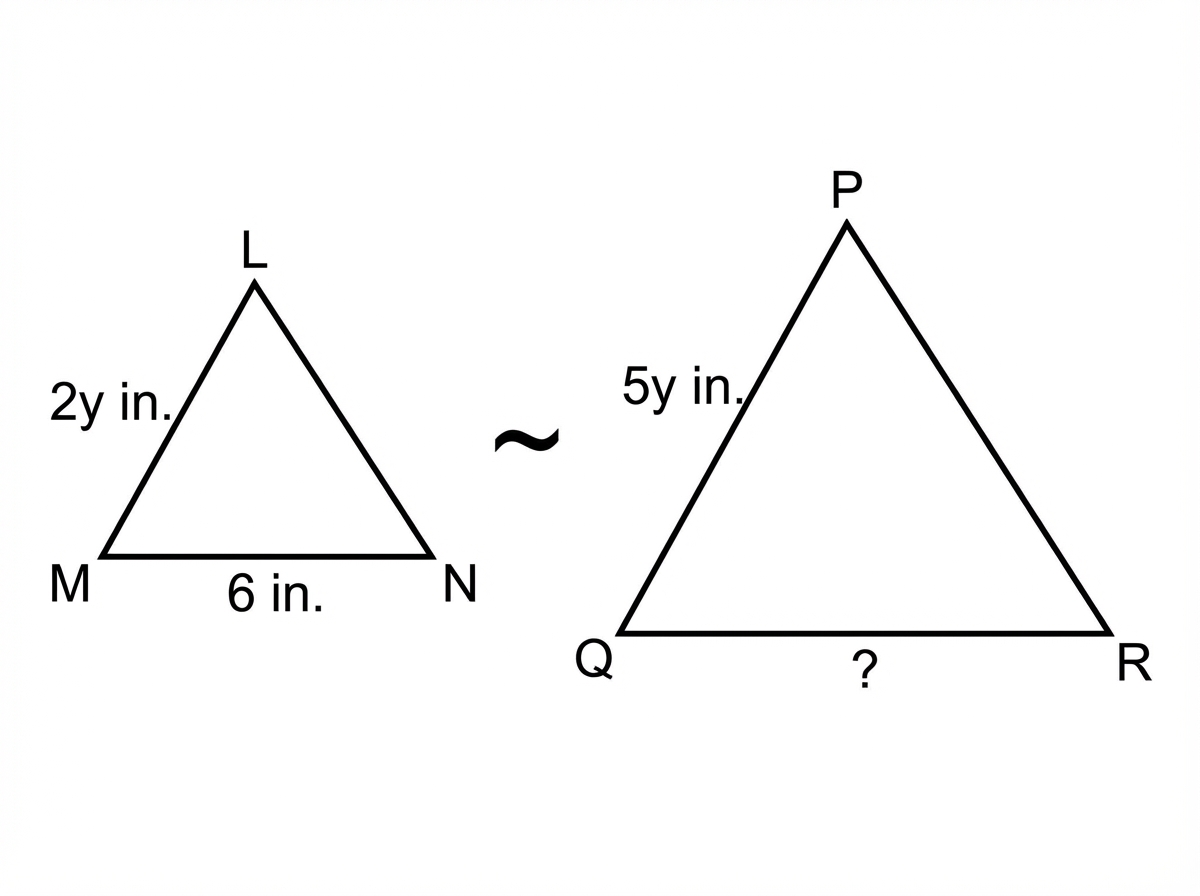
Show Solution
- For similar triangles, corresponding sides are proportional. The ratio of side to side is , which simplifies to . Set this equal to the ratio of side to side : . Cross-multiply to get , which means the length of is inches.
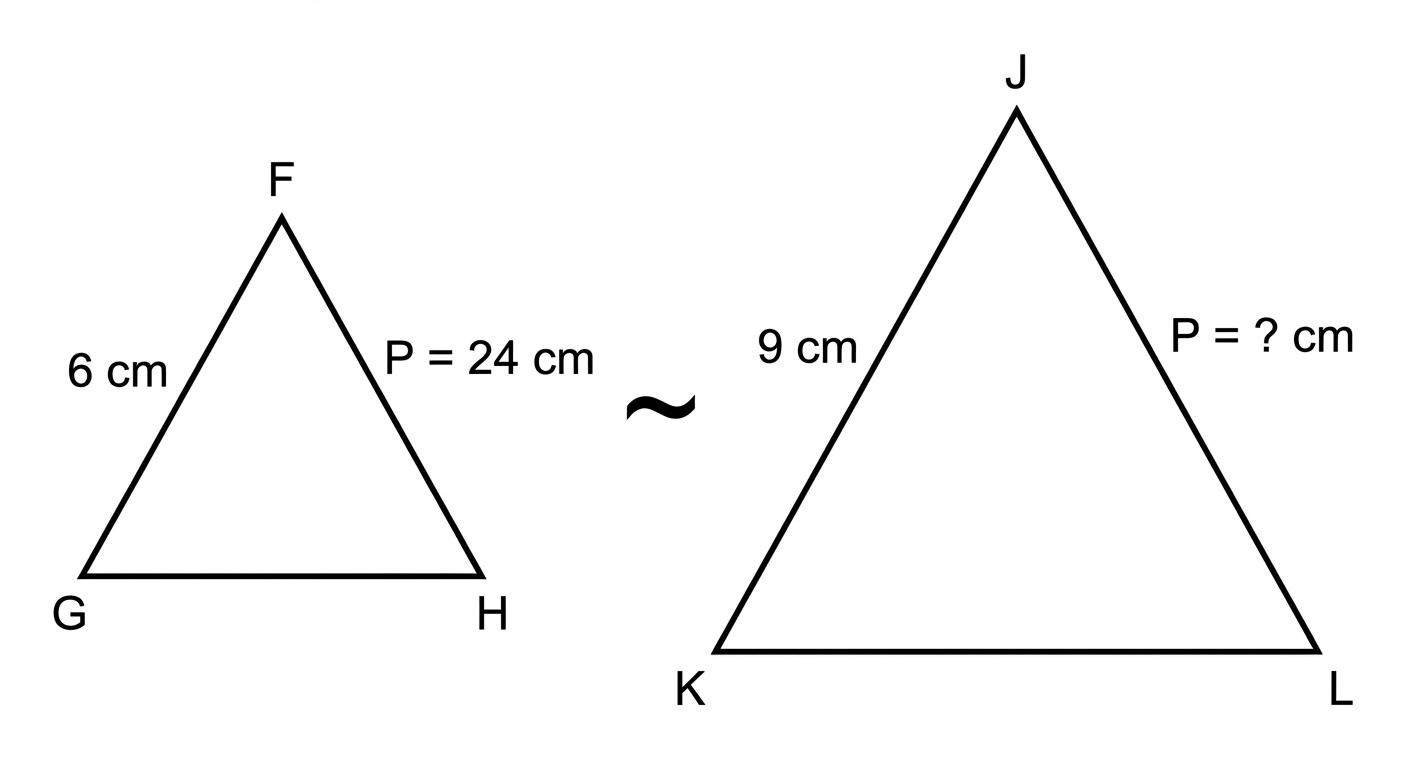
Show Solution
- If two triangles are similar, the ratio of their perimeters is equal to the ratio of their corresponding side lengths. The ratio of side to side is , which simplifies to . Set up the proportion , where is the perimeter of triangle . Cross-multiply to get , so cm.
Tips & Strategies
- Look out for 'Pythagorean Triples'! The ISEE loves using right triangles with sides of and . If you memorize these sets, you can skip the math and save tons of time!
- The height of a triangle MUST go straight up and down, making a angle with the base. Never use a slanted side as your height when finding the area!
- If you are stuck on a Quantitative Comparison question about triangles, draw a quick sketch! Seeing the shapes on your scratch paper can help your brain figure out which one is bigger.
Common Mistakes
- Watch out for forgetting the in the area formula! A lot of students just multiply base times height, but that gives you the area of a rectangle. Always remember to chop it in half!
- Don't forget the magic number! Some students accidentally think triangle angles add up to . Remember, circles and squares use 360, but triangles are always .
Frequently Asked Questions
What exactly is a 'hypotenuse'?
The hypotenuse is just a fancy math word for the longest side of a right triangle! You can always find it easily because it is directly across from the square angle.
Do I need to memorize the Pythagorean Theorem for the ISEE?
Yes! The formula is super important, especially if you are taking the Middle or Upper Level ISEE. It is the best tool for finding missing sides of right triangles.
What if a triangle question is too hard and I don't know the answer?
Guess! The ISEE does not have a guessing penalty. If a triangle puzzle is taking too much time, pick your favorite letter, bubble it in, and move on. Never leave a question blank!
How do I know which side of the triangle is the 'base'?
The secret is that the base can be ANY side of the triangle! Just make sure that the 'height' you use is a straight line that drops from the opposite corner perfectly down to that base.