
Visual & Spatial Reasoning
Non-coordinate spatial reasoning: net folding, cube counting/painting, paper folding, figure rotation recognition, and 3D visualization — excludes coordinate-based transformations (see transformations)
Generate Unlimited Practice Questions
Sign up for free and get 50 practice questions to start your prep.
Start Free PracticeLearn This Topic
Have you ever tried to cram a giant sleeping bag into a tiny stuff sack, or played a video game like Minecraft where you build 3D worlds block by block? 🎮 If so, you already use Visual and Spatial Reasoning! On the SSAT, this math topic is like a brain-gym where you get to show off your superpower of twisting, turning, and folding shapes—all entirely inside your head! 🧠
Spatial reasoning isn't about memorizing long, boring math rules or doing crazy long division. Instead, it's about imagining what happens when you fold a flat piece of paper into a box (we call that a "net"), or figuring out what a painted block looks like if you spin it around. Imagine you have a pizza box. When it's flat, it looks like a weird cardboard alien. But when you fold the sides up, boom—it's a 3D box ready to hold a delicious pepperoni pizza! 🍕
When you see these questions on the SSAT, don't panic. You don't need magic to solve them. You just need to look for clues, like matching up the sides of a box, tracking where a specific shape goes when it rotates, or counting hidden cubes in a stack that you can't see but know must be there holding the top ones up. Get ready to be a shape ninja! 🥷
Practice Questions
4 practice questions for SSAT Middle Level
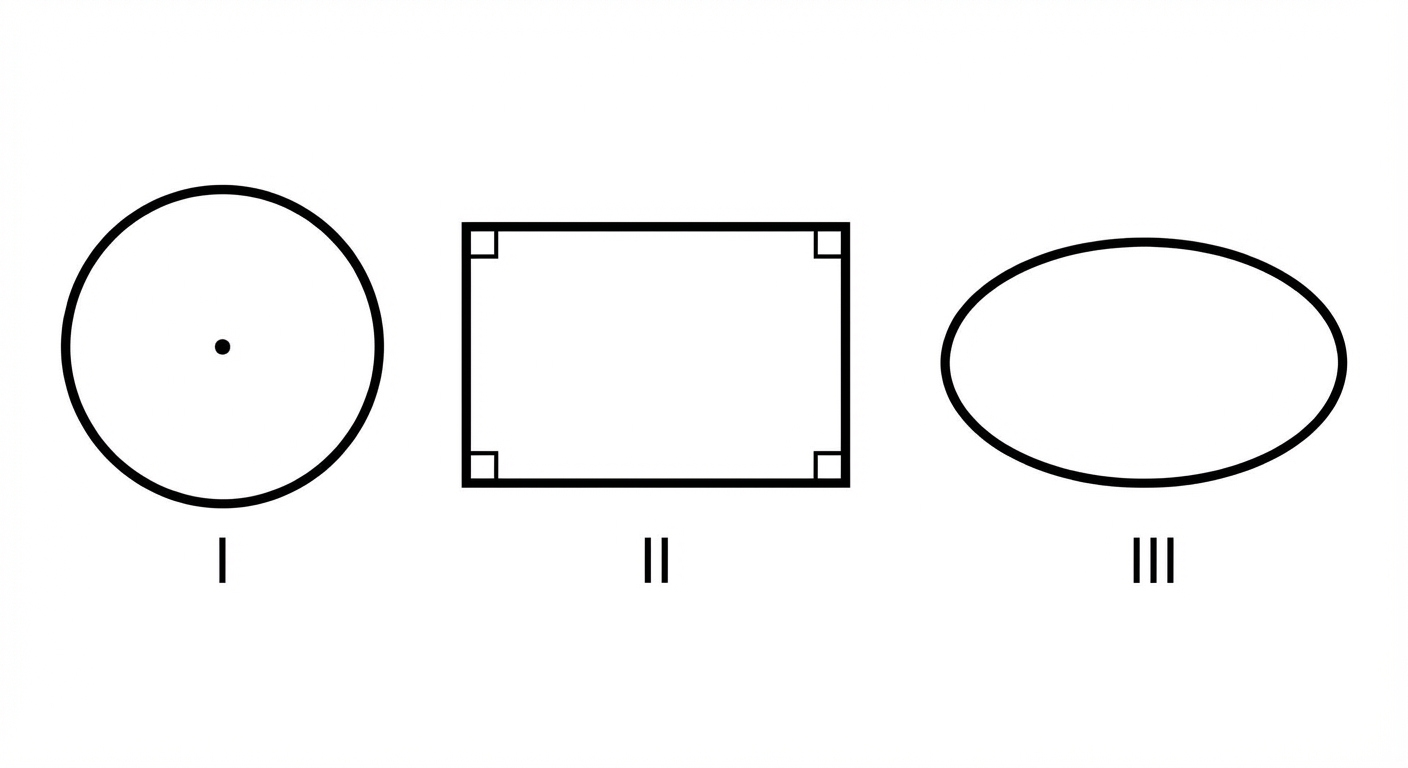
Show Solution
- All three figures can be formed depending on the angle of the plane. If the plane slices parallel to the circular base, a circle (I) is formed. If the plane slices perfectly perpendicular to the base (straight down from top to bottom), a rectangle (II) is formed. If the plane slices through the cylinder at an angle, an oval or ellipse (III) is formed. Therefore, I, II, and III are all possible.
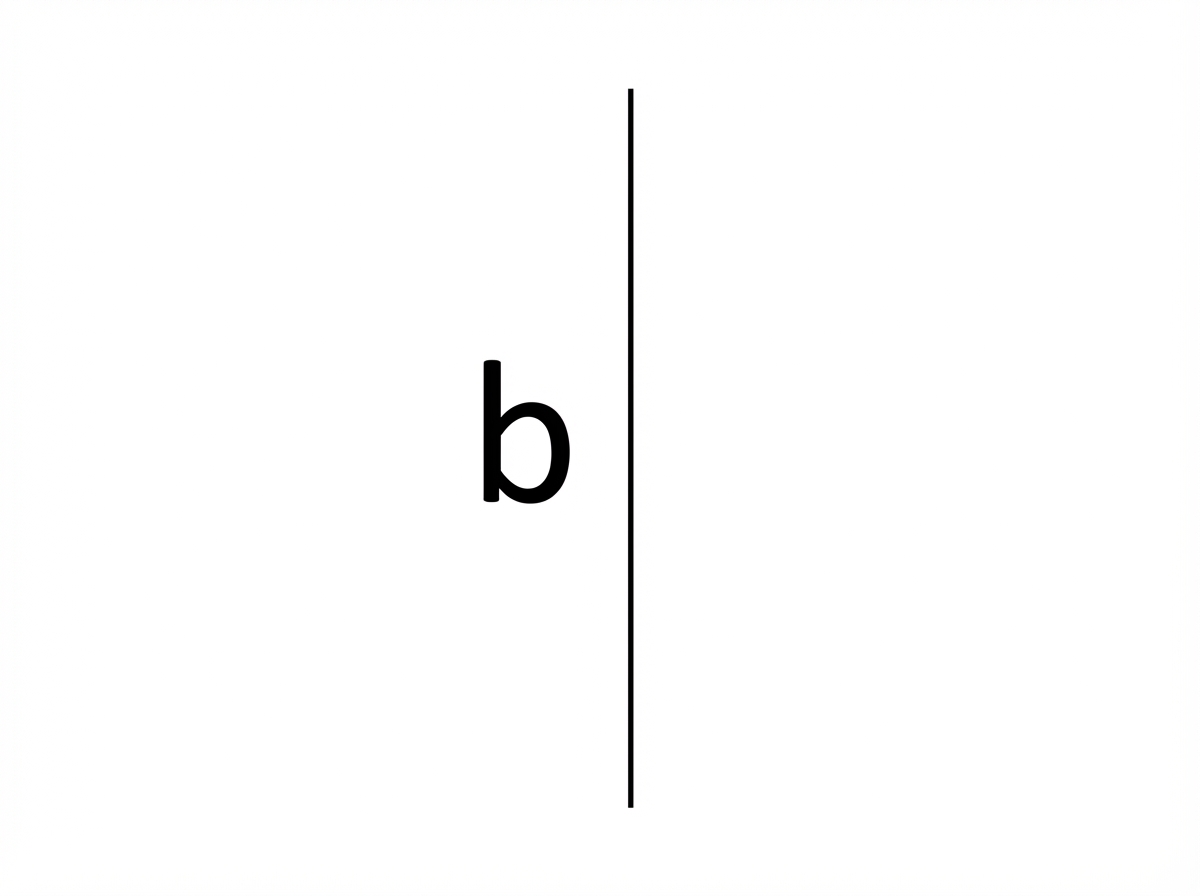
Show Solution
- First, visualize the letter , which has a vertical line on the left and a loop on the bottom right. Reflecting it across a vertical line flips it horizontally, moving the vertical line to the right and the loop to the bottom left. This forms the letter . Next, rotating the by turns it upside down. The vertical line on the right moves to the left, and the loop on the bottom left moves to the top right. This final shape is the letter .
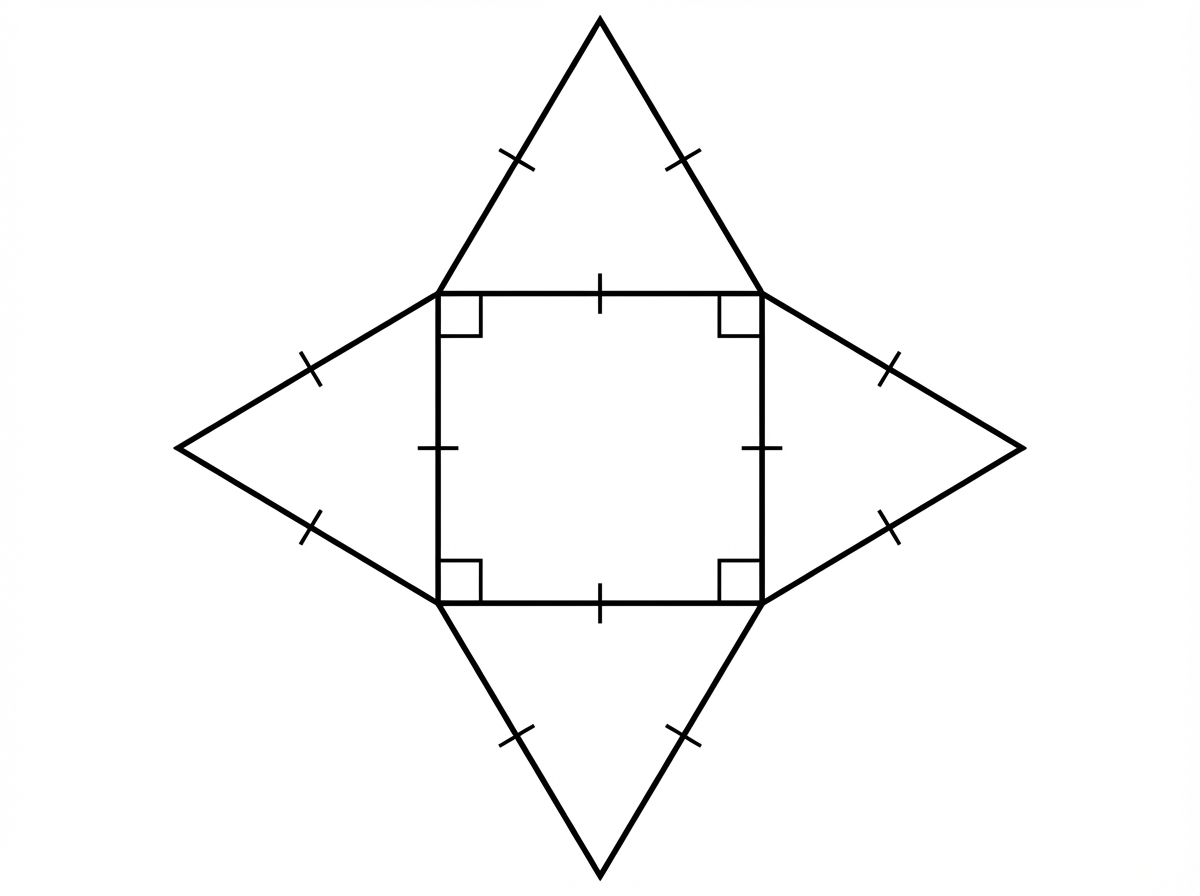
Show Solution
- A square pyramid is a 3D geometric shape that has a square base and four triangular faces that meet at a single point (the apex). When the net is folded along the edges of the square, the four triangles will stand up and their tips will meet at the top, forming a square pyramid.
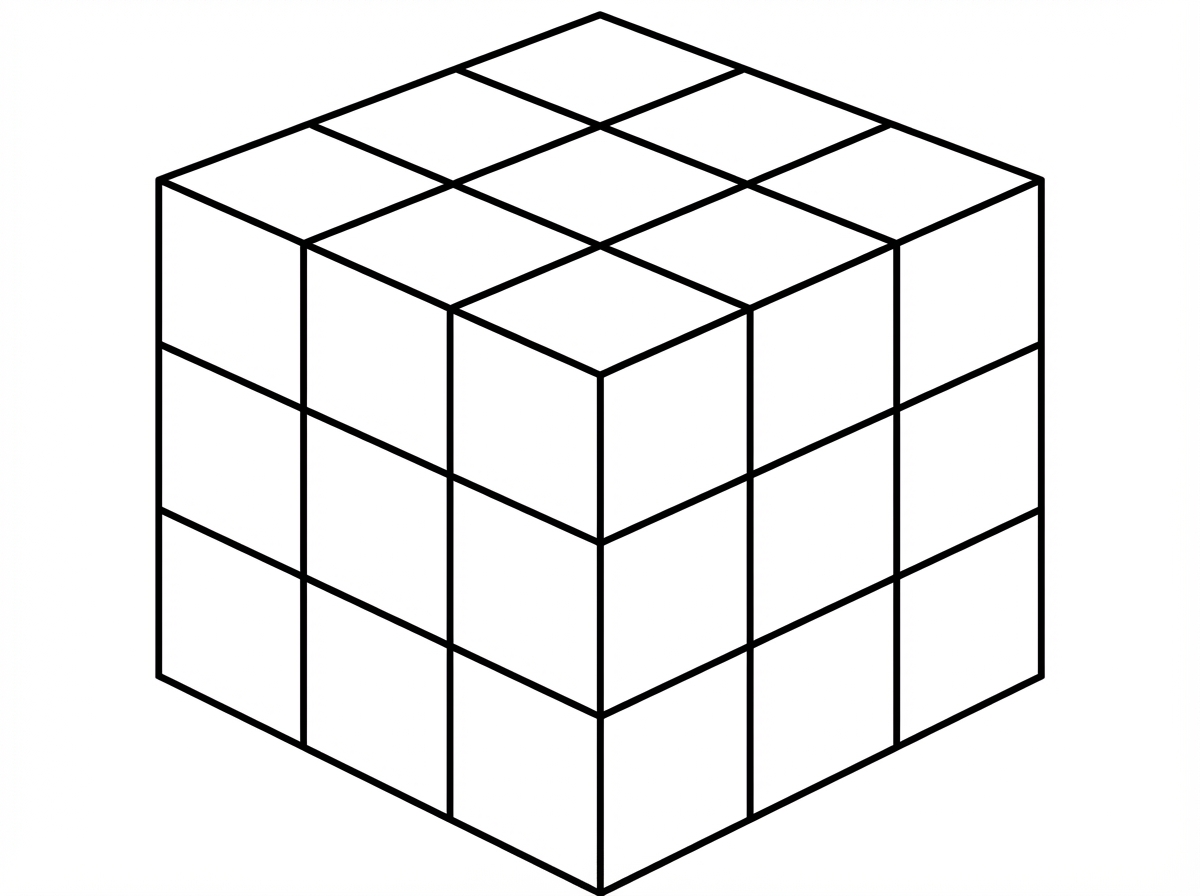
Show Solution
- To find the cubes with exactly two painted faces, we need to look at the edges of the large cube. The corner cubes have 3 painted faces. The cubes in the very center of each face have 1 painted face. The cube completely hidden in the middle has 0 painted faces. The cubes with exactly 2 painted faces are the middle cubes on each of the large cube's edges. A cube has 12 edges, and on a cube, there is exactly 1 middle cube per edge. Therefore, there are smaller cubes with exactly two red faces.
Tips & Strategies
- Draw it out! ✏️ If you can't see the hidden blocks in a stack, lightly sketch them on your test booklet or write the number of blocks in each column right on top of the picture.
- Track a single feature. 👀 When rotating a 3D shape in your head, pick one unique feature (like a star, a dark spot, or a weird corner) and track where that one thing goes instead of trying to spin the whole shape at once.
- Use your hands! ✋ You can physically spin your eraser or use your fingers to mimic folding a box to help your brain imagine the rotation during the test.
Common Mistakes
- Watch out for floating blocks! 🧱 In cube-stacking problems, remember that floating blocks need blocks underneath them to hold them up. Don't just count the ones you can see; count the hidden supports too!
- Don't forget that a cube has sides! When looking at a flat 'net' that is supposed to fold into a cube, if it only has squares, it will make a box with no lid, not a closed cube.
Frequently Asked Questions
Do I need to be good at drawing to do well on this?
Not at all! 🎨 You just need to be good at imagining. Simple scribbles, writing numbers, or just using your hands to mimic the shapes is more than enough to find the right answer.
Will there be complex 3D shapes like dodecahedrons on the SSAT?
Nope! The SSAT sticks to basic shapes you know well, like cubes, rectangular prisms (boxes), and simple pyramids. You won't need to fold a 20-sided dice!
How can I practice spatial reasoning at home?
Play with building blocks like LEGOs, do jigsaw puzzles, or try folding origami! Even playing video games like Tetris or Minecraft is secretly great spatial reasoning practice. 🕹️
What if I completely blank out on a paper folding question?
Try to work backwards! Look at the final unfolded shape in the answer choices and imagine folding it up. Does the hole end up where the question said it was? Eliminating wrong answers is a great backup strategy.