
Segments & Lengths
Segment arithmetic, midpoints, bisectors, and line segment relationships — 1D geometry without angle measurement
Generate Unlimited Practice Questions
Sign up for free and get 50 practice questions to start your prep.
Start Free PracticeLearn This Topic
Imagine you have a giant, 10-foot-long submarine sandwich. 🥪 If you want to share it with your best friend, you'll probably chop it right down the middle. In geometry, that sandwich is a line segment—a straight line with a clear beginning and end. And that exact middle spot? That's called the midpoint!
On the ISEE, you'll see lots of questions about segments and lengths. The test makers love to give you a long segment chopped into smaller pieces and ask you to figure out the missing lengths. It's basically a fun math puzzle! If you know the whole sandwich is 10 feet long, and your friend eats 4 feet of it, you know you have exactly 6 feet left. This is called the Segment Addition Postulate (which is just a super fancy way of saying 'small piece + small piece = whole thing').
Sometimes, the ISEE Quantitative Reasoning section will ask you to compare two different segments. Just remember: a bisector is like the knife that cuts a segment exactly in half, creating two perfectly equal pieces. 📏 If a question mentions a midpoint or a bisector, you instantly know you have two matching halves. Keep your eyes peeled for those magic keywords, always draw a quick picture on your scratch paper, and you'll be a segment-solving superstar on test day!
Practice Questions
3 practice questions for ISEE Middle Level
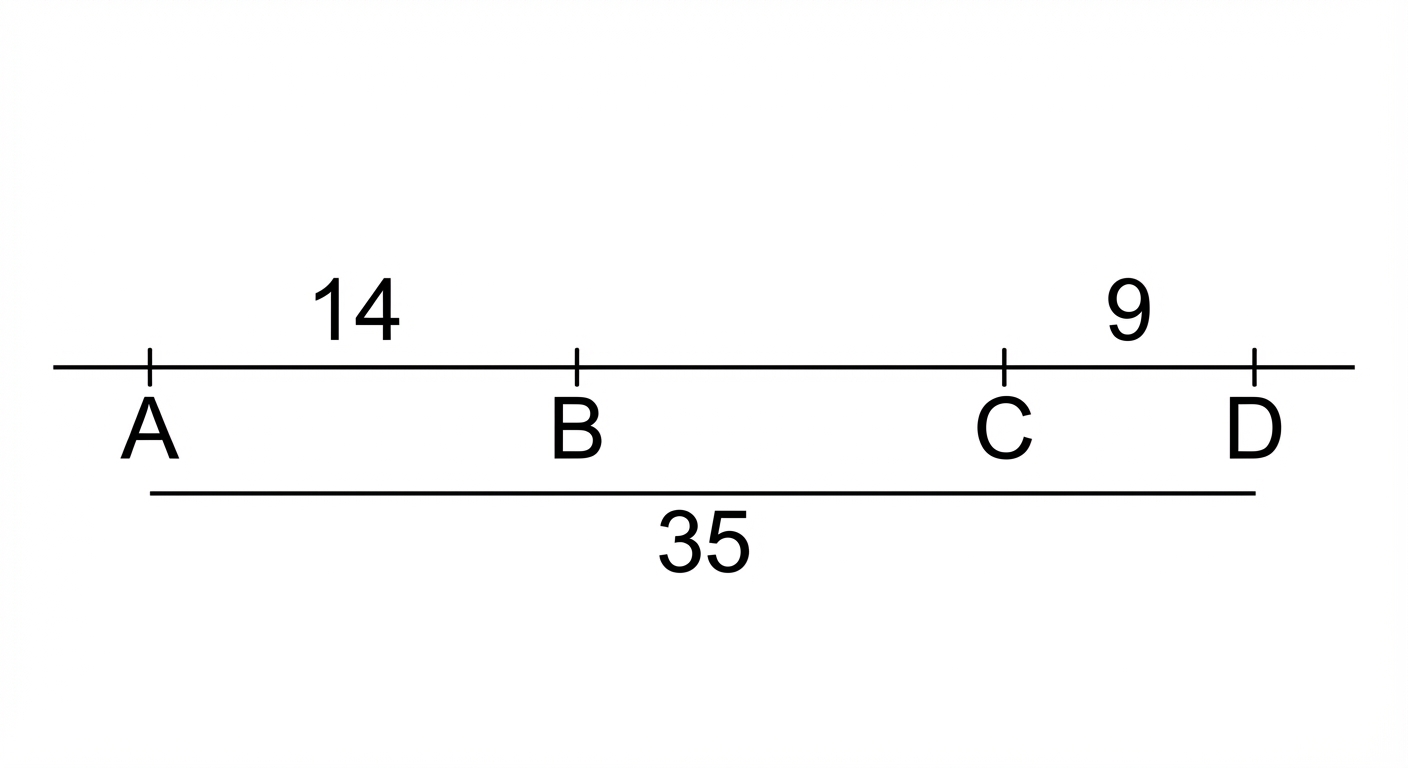
Show Solution
- Since the points are in order , , , , the total length . Substitute the known values: . Solve: .
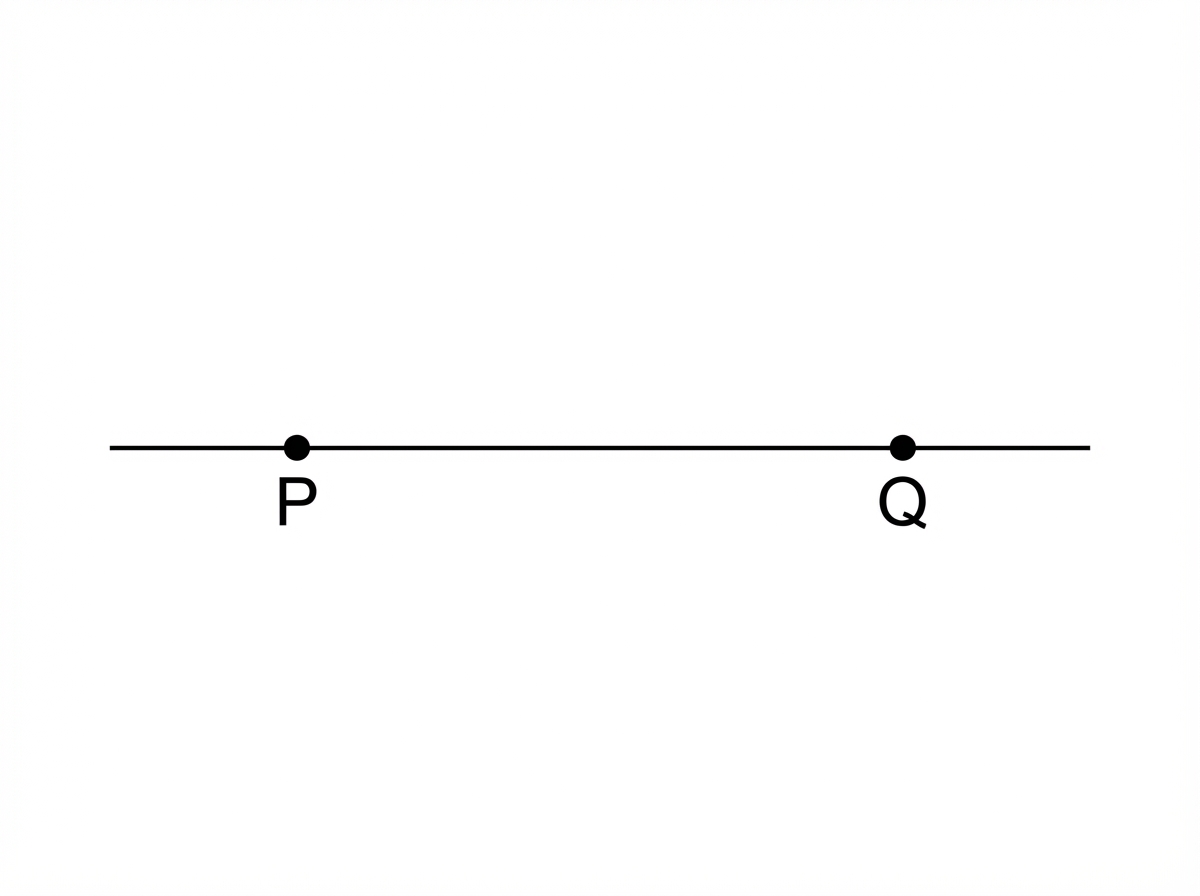
Show Solution
- The midpoint of a segment is the average of the two endpoint coordinates: .
Show Solution
- Column A: Miles Elena has already driven (P to Q) = 48 miles. Column B: Miles Elena still has to drive (Q to R to S) = miles. Since , Column B is greater.
Tips & Strategies
- Always draw a picture! ✏️ The ISEE often describes segments using only words. Drawing a quick line and labeling the points will instantly make the math easier to see.
- Pay close attention to what the question is actually asking. If you solve for , double-check if the test wants the value of or the length of the entire segment. They love to put the value of as a trap answer!
- Look for magic words like 'midpoint' and 'bisect'. These are secret codes telling you that two pieces are exactly equal.
Common Mistakes
- Watch out for assuming a point is a midpoint just because it's drawn in the middle. On the ISEE, unless the problem specifically says 'midpoint', 'bisects', or shows equal tick marks, you cannot assume the two halves are equal!
- Don't forget to answer every question! There is NO penalty for guessing on the ISEE. If you're stuck on a segment puzzle, take your best guess and move on.
Frequently Asked Questions
Do I need a ruler for the ISEE?
Nope! In fact, you aren't allowed to bring a ruler. The shapes on the test are usually 'not drawn to scale', which means you have to rely on the numbers and formulas, not your eyes, to solve the problem.
What does it mean if points are 'collinear'?
Collinear is just a fancy geometry word that means 'on the same line'. If the ISEE says points A, B, and C are collinear, you can draw one straight line right through all of them!
What's the difference between Quantitative Reasoning and Math Achievement?
Great question! Quantitative Reasoning has less reading and uses more logic, including Column A vs. Column B questions. Math Achievement tests what you've learned in school, so you'll see more standard math problems and word problems there.
What if I get a fraction when solving for a segment length?
Don't panic! Segment lengths can absolutely be fractions or decimals. If a segment is units long, its midpoint will split it into two equal pieces that are each or units long.