
Volume & Surface Area
Calculating volume and surface area of prisms, cylinders, cones, and spheres
Generate Unlimited Practice Questions
Sign up for free and get 50 practice questions to start your prep.
Start Free PracticeLearn This Topic
Imagine you have a giant cardboard box. If you want to paint the outside of the box to look like a Minecraft creeper, you need to know the Surface Area. But if you want to fill that same box to the brim with green slime, you need to know the Volume! 📦🟩
Surface Area is the total area of all the outside faces of a 3D shape. It's like wrapping a present with wrapping paper. Volume is how much space is inside the 3D shape. It's like pouring water into a fish tank. On the ISEE, you will see questions about these measurement concepts in both the Mathematics Achievement section (where you just solve the math) and the Quantitative Reasoning section (where you might compare two different shapes).
The best part about Volume is that it usually follows one simple rule for shapes like prisms and cylinders: just find the area of the bottom (the base) and multiply it by how tall it is (the height). Think of it like a stack of pancakes! 🥞 If you know how big one pancake is (the base area), you just multiply by the number of pancakes in the stack (the height) to find out exactly how much breakfast you have. Let's dive into some formulas and crush these ISEE shapes!
Practice Questions
4 practice questions for ISEE Middle Level
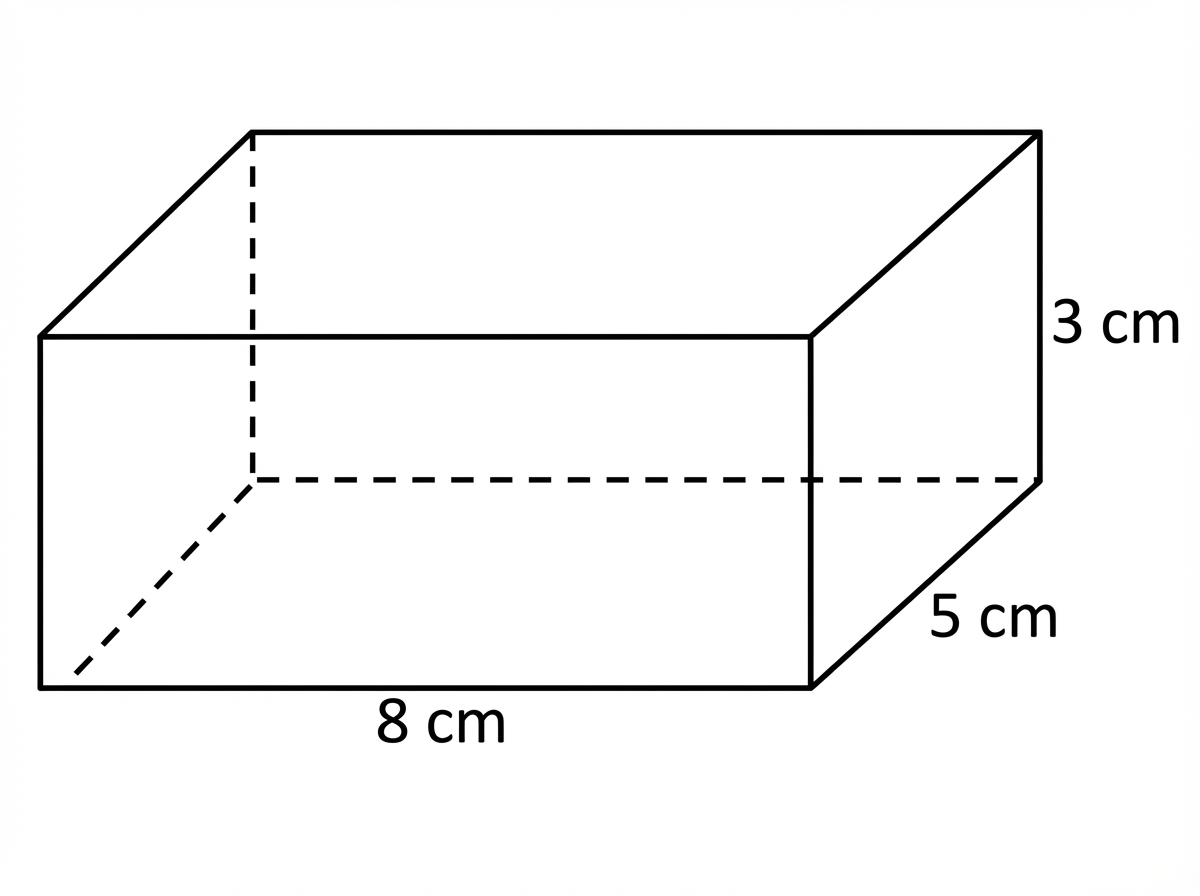
Show Solution
- The volume of a rectangular prism is . Substitute the given dimensions: cm.
Show Solution
- A cube has 6 equal square faces. If the surface area is 54 in, each face has area in. The side length of each face is in. The volume of the cube is in.
Show Solution
- Find the side length of each cube by taking the cube root of its volume. Smaller cube: cm. Larger cube: cm. The ratio of side lengths is
3 : 5.
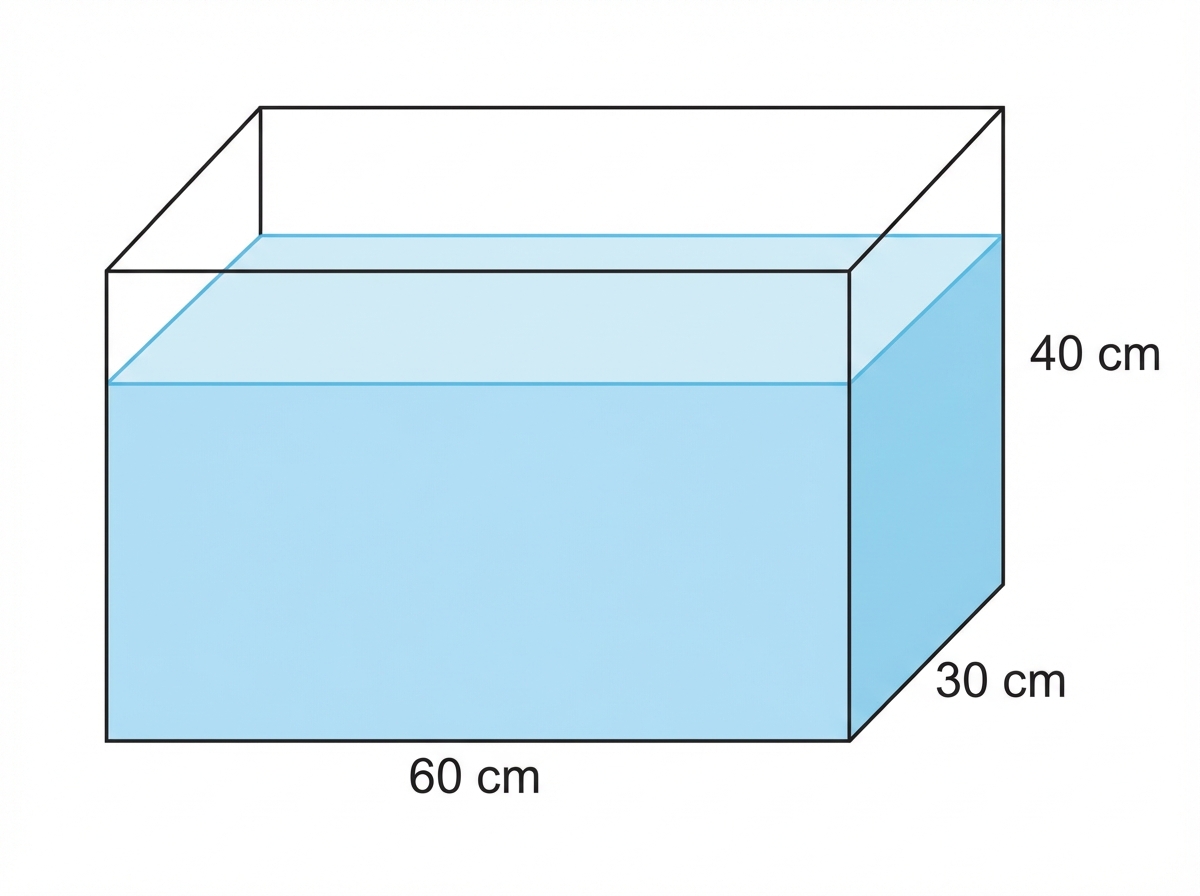
Show Solution
- First, find the total volume of the tank: cm. The tank is full, so the volume of water is cm.
Tips & Strategies
- When comparing shapes with Pi () on the Quantitative Reasoning section, remember that is just a number slightly bigger than 3. You can usually just multiply by 3 to estimate!
- If you forget a formula, try to draw the shape. If it's a box or a tube, Volume is always the area of the bottom shape multiplied by how tall it is.
- Pay attention to 'radius' vs 'diameter'. The ISEE loves to give you the diameter when the formula needs the radius. Always cut the diameter in half to get your radius!
Common Mistakes
- Watch out for forgetting the in cone and pyramid volume formulas! Pointy shapes hold exactly one-third the amount of stuff as straight-up-and-down shapes with the same base.
- Don't forget that on the ISEE there is NO penalty for guessing! If a volume question looks too scary, pick your favorite letter and move on. Never leave it blank!
Frequently Asked Questions
Do I need to memorize all these formulas for the ISEE?
Yes, mostly! The ISEE doesn't give you a formula sheet. But don't panic! Just remember the pancake rule: Area of the base times the height. That works for cubes, boxes, and cylinders!
What is a Quantitative Comparison question?
It's a special puzzle on the ISEE where you don't just solve one math problem, you solve two! You figure out the number for Column A, the number for Column B, and decide which one is bigger. If they match, pick C. If it's impossible to know, pick D.
How do I remember the difference between Volume and Surface Area?
Volume is what goes INSIDE (like filling a water balloon). Surface Area is the OUTSIDE (like the rubber of the balloon itself). Volume answers are always 'cubic' (like ) and Surface Area answers are always 'square' (like ).