
Volume & Surface Area
Calculating volume and surface area of prisms, cylinders, cones, and spheres
Generate Unlimited Practice Questions
Sign up for free and get 50 practice questions to start your prep.
Start Free PracticeLearn This Topic
Have you ever wondered how many jellybeans could fit inside a giant swimming pool? Or maybe you've tried to wrap a weirdly shaped birthday present and ran out of wrapping paper? Welcome to the fun world of Volume and Surface Area! 🎁🏊♂️
Volume is all about what fits inside a 3D shape. Think of it as the amount of juice in your juice box or the air inside a basketball. When we measure volume, we use "cubic" units. Imagine packing a box full of tiny, perfect blocks!
Surface Area is the exact opposite—it's all about the outside. If you wanted to paint your treehouse or wrap a gift, the surface area tells you exactly how much paint or paper you need to cover every single side. It's flat, so we measure it in "square" units, just like regular area.
On the SSAT, you will get to be a master builder! You will see questions asking you to find the volume or surface area of rectangular boxes (prisms), soup cans (cylinders), ice cream cones (cones), and sports balls (spheres). The secret trick? You don't need to guess! You just need to know a few magical formulas. Once you know the formula, you just plug in the numbers and multiply. You've totally got this! 🚀
Practice Questions
5 practice questions for SSAT Upper Level
Show Solution
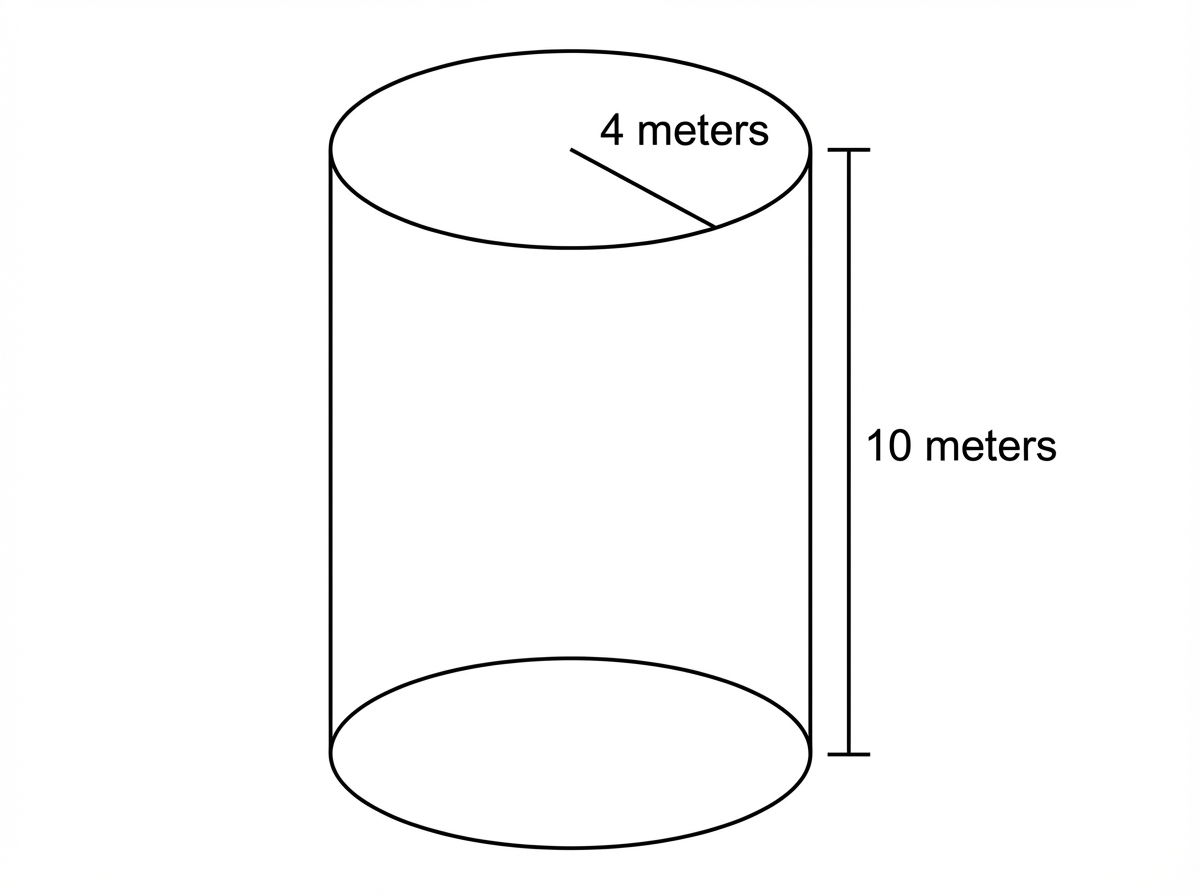
- The volume of a cylinder is given by the formula .
The first tank has a radius and height .
The second tank has twice the radius, so its new radius is meters. It has half the height, so its new height is meters.
Substitute these new dimensions into the volume formula:
cubic meters.
Show Solution
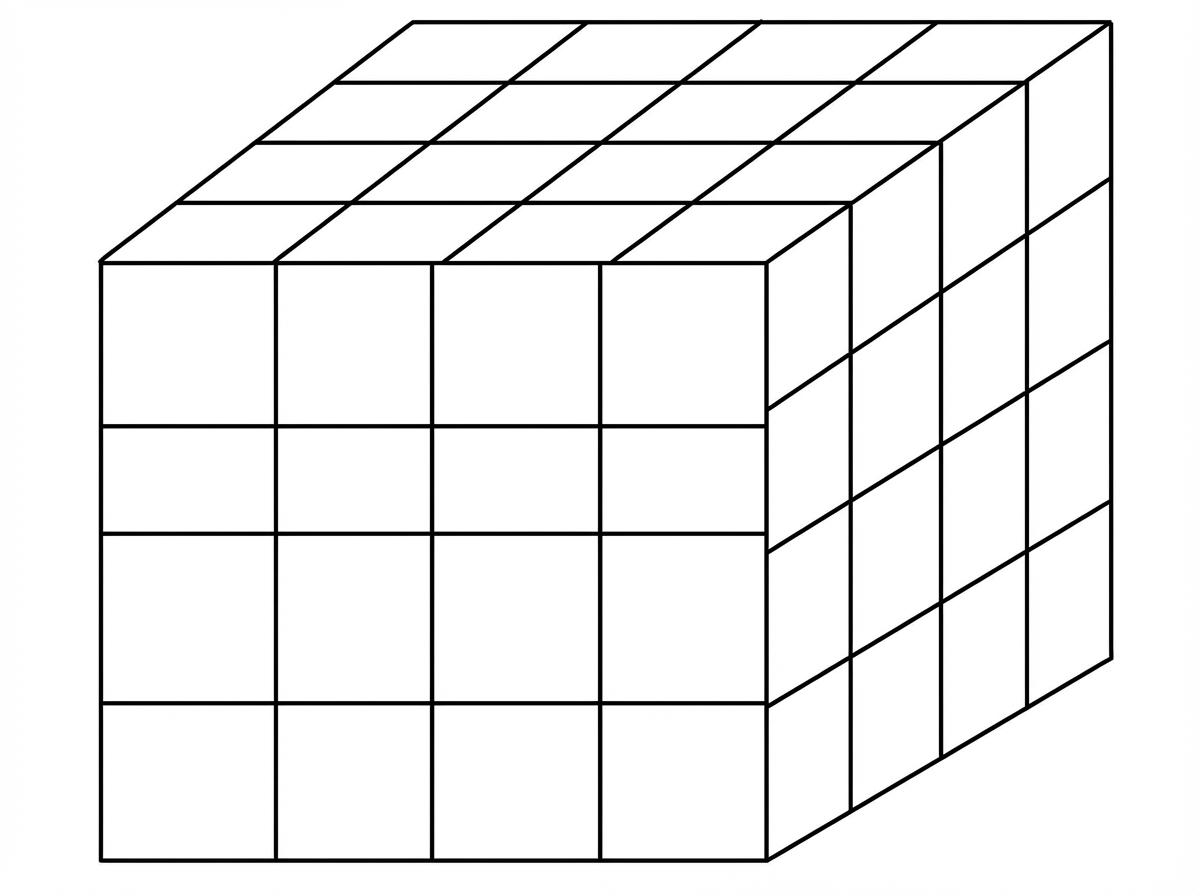
- Consider the faces of the single unit cube located at the corner of the large cube. It has 3 faces exposed to the outside, which contribute to the large cube's total surface area. When this corner cube is removed, those 3 exposed faces are lost. However, removing the cube also exposes 3 inner faces from the adjacent cubes left behind (the "walls" and "floor" of the missing corner). Since the 3 removed faces and the 3 newly exposed faces have the exact same area (1 square unit each), the loss and the gain balance each other out perfectly. Therefore, the total surface area remains exactly the same.
Show Solution
- The total volume of the rectangular pool is given by . We are told the pool contains 500 cubic meters of water when it is half full. Therefore, the total capacity of the pool when completely full is cubic meters. Substitute the known values into the volume formula:
Divide both sides by 250:
meters.
Show Solution
- First, use the volume formula for a right circular cylinder, , to find the radius .
Divide both sides by :
Taking the square root gives inches.
Next, find the total surface area, which is the sum of the areas of the two circular bases and the lateral surface area: .
square inches.
Show Solution
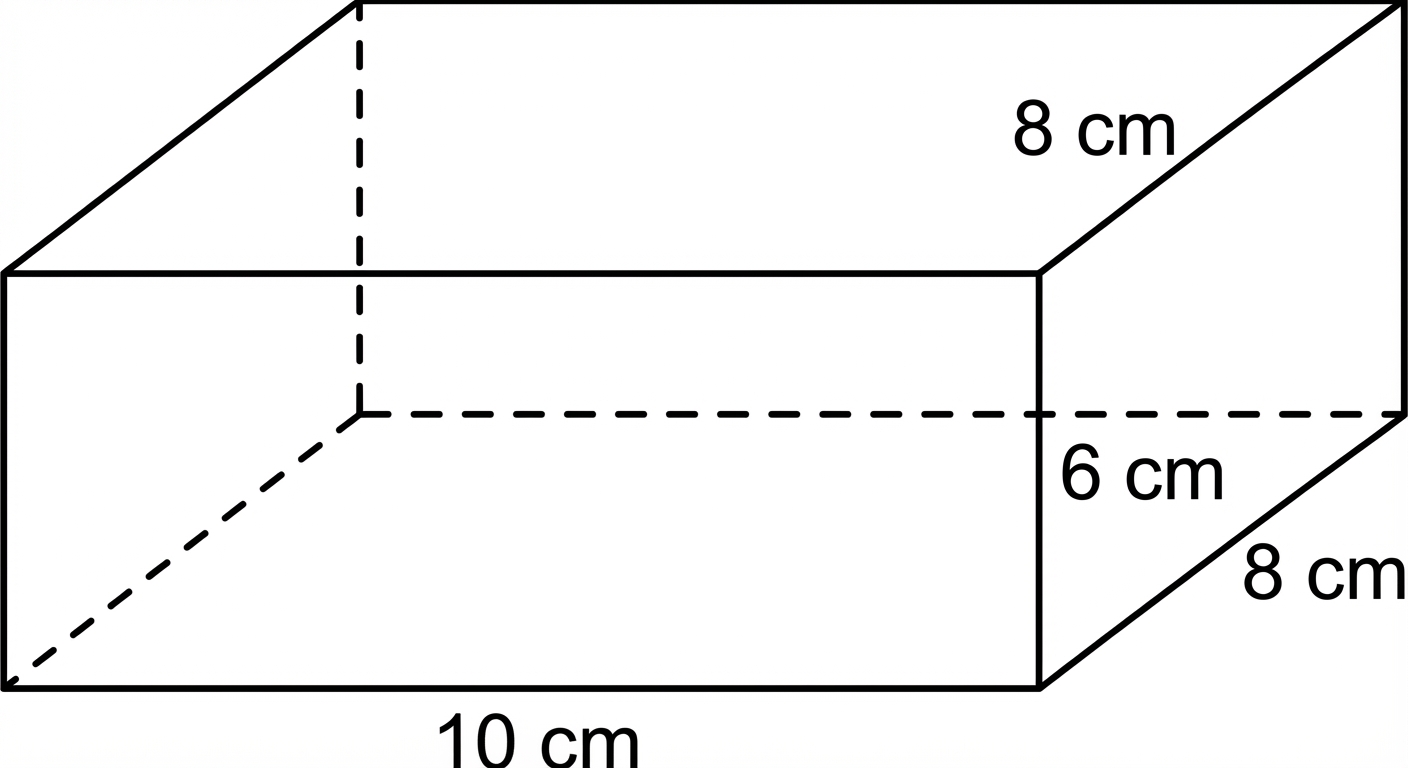
- First, find the volume of the solid metal rectangular block.
cubic centimeters.
Next, find the volume of one of the smaller solid cubes.
cubic centimeters.
Since there is no loss of metal, divide the total volume of the block by the volume of a single small cube to find the number of cubes that can be made:
cubes.
Tips & Strategies
- Always check the units! Sometimes the SSAT will try to trick you by giving the length in inches but asking for the final answer in feet.
- Draw a quick picture! If the problem describes a box or a cylinder but doesn't show it, sketch it out and label the sides. It makes the math so much easier to see. ✏️
- Remember the difference between square and cubic units. Area and Surface Area are flat, so they use square units like . Volume is 3D, so it uses cubic units like .
Common Mistakes
- ⚠️ Watch out for confusing the radius and the diameter! If a problem gives you the diameter of a cylinder or sphere, remember to divide it by 2 to find the radius before plugging it into your formula: .
- ⚠️ Don't forget that Surface Area means adding up the area of every single side. For a rectangular box, there are 6 sides! A common mistake is only adding up the front, top, and one side.
Frequently Asked Questions
Do I need to memorize all the volume formulas for the SSAT?
You should definitely memorize the formula for a rectangular box () and a cylinder (). For trickier shapes like spheres or cones, the SSAT often gives you the formula right in the question!
What is and what number should I use for it?
(Pi) is a special math symbol that helps us measure circles. On the SSAT, you usually don't even need to change it into a number! Just leave it as the symbol in your answer choices. If you do need to estimate, use or .
How do I find the surface area of a strange, lumpy shape?
Don't worry, the SSAT won't make you find the surface area of a lumpy potato! You will only be asked to find the surface area of standard 3D shapes. Just find the area of each flat side and add them all together.
Why does the cone volume formula have a in it?
If you have a cylinder and a cone with the exact same height and base, the cone holds exactly one-third the amount of water as the cylinder. It's like magic! That's why we multiply the cylinder formula by to find the cone's volume.